Showing posts with label Bees. Show all posts

Monday, July 2, 2018

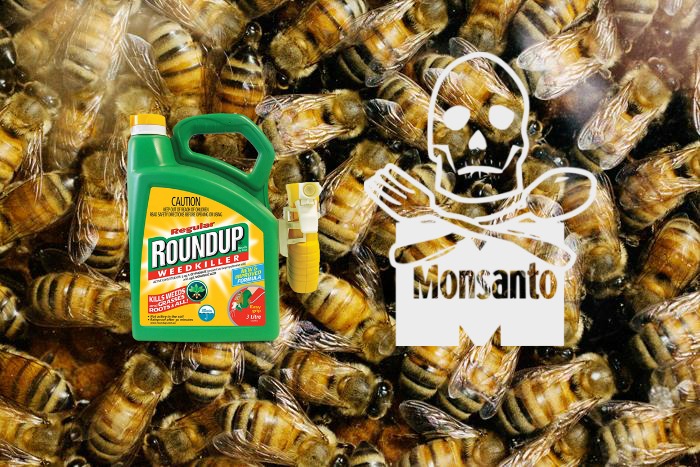
French Beekeepers Go After Bayer After Glyphosate Found In Honey

French Beekeepers Go After Bayer After finding Glyphosate HoneyBrandon Turbeville
Natural Blaze
June 26, 2018

“I’m not going to be like everyone else, I’m going to file suit against Monsanto”

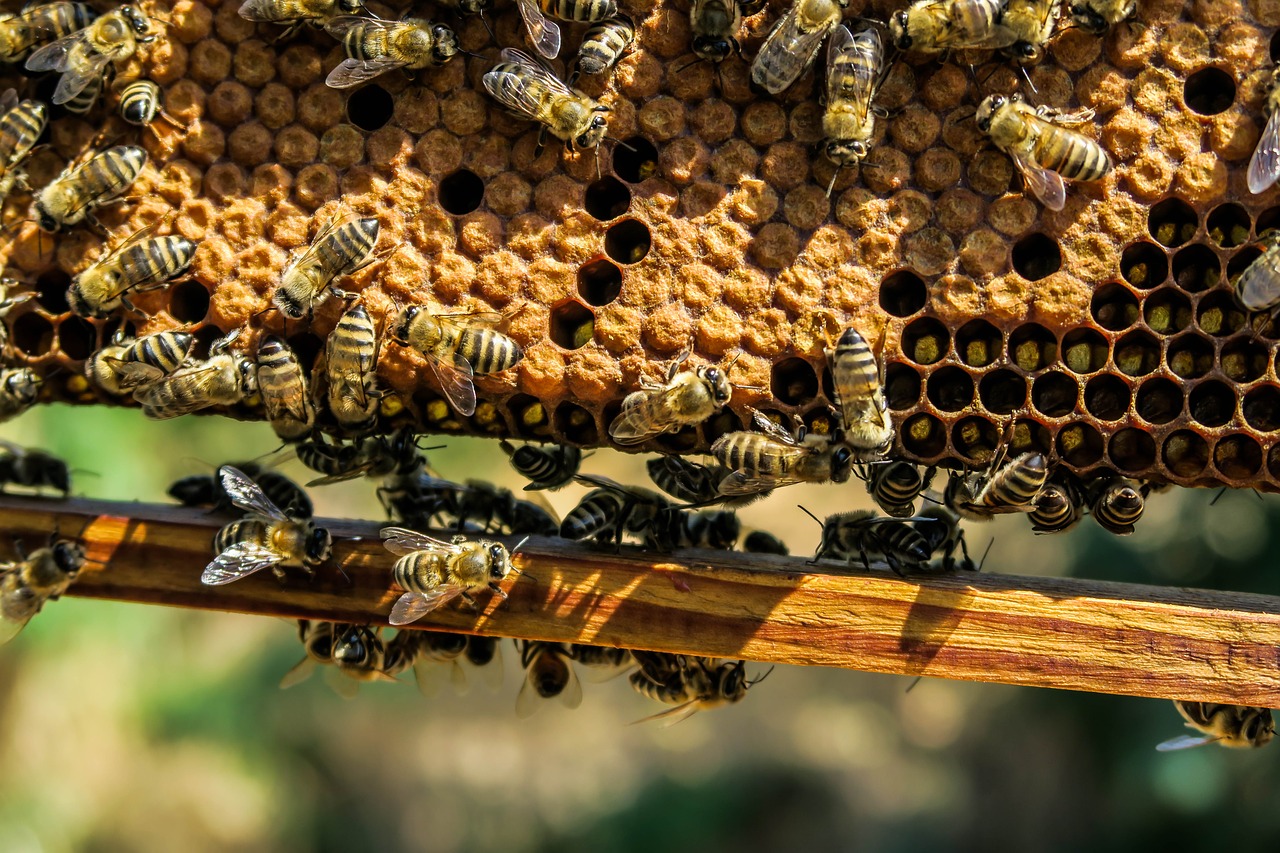
A beekeeping cooperative in northern France has filed a legal complaint against Bayer, the German chemical giant that recently merged with Monsanto after finding traces of glyphosate in their honey.

The herbicide was detected by Famille Michaud, one of France's largest honey marketers, in three batches of honey provided by its members.

The head of the cooperative in the region of Aisne, Jean-Marie Camus, said "They systematically analyse the honey shipments they receive, and they found glyphosate." 

Glyphosate, also known as Roundup, is the most widely used in France, though French President Emmanuel Macron has agreed to attempt to ban it by 2021.

While evidence has repeatedly shown that links Glyphosate to cancer, liver disease, and a host of other negative health effects, it has also been linked to the decline in the bee population, making the discovery of glyphosate in honey all the more concerning since it is clearly reaching bees. 

The new European Soviet, the EU, renewed the license for glyphosate weedkillers last November despite many Europeans and even European governments having deep reservations and intense opposition.


Irish Bumblebee Populations Hit Record 6-Year Low, Threatened With Extinction

Brandon Turbeville
Natural Blaze
June 18, 2018

As bee populations continue to decline the world over, even more bad news is headed our way. According to numbers recorded in 2017, Irish bumblebee populations were at the lowest level since monitoring began six years earlier.

The results indicated a relative marked loss in critical native bee species.

The decline in the bee populations were confirmed by All Ireland Bumblebee Monitoring Scheme which is coordinated by Dr. Tomas Murray, National Biodiversity Data Centre Senior ecologist in Waterford County.

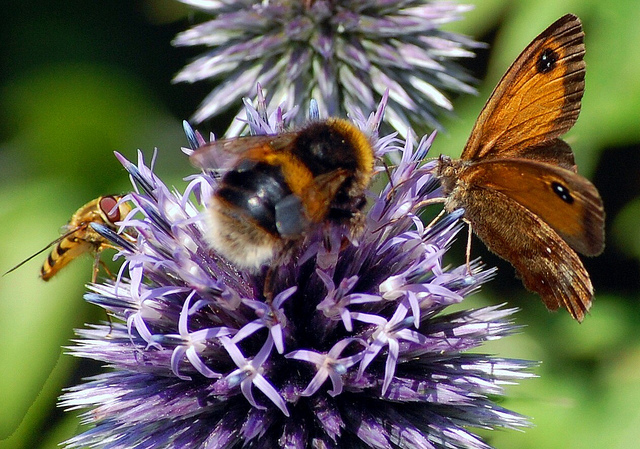
Ireland has 21 different species of bumblebee, all of which are vital in the pollination process for both crops and wild plants. The findings mentioned above were based upon the past six years of monitoring at over 100 sites and focusing on eight of the most common Irish bumblebee species.

“Based on a 2006 ‘red list’ , we already knew that six of our rarer 21 bumblebee species are threatened with extinction from this island,” Dr Murray said.

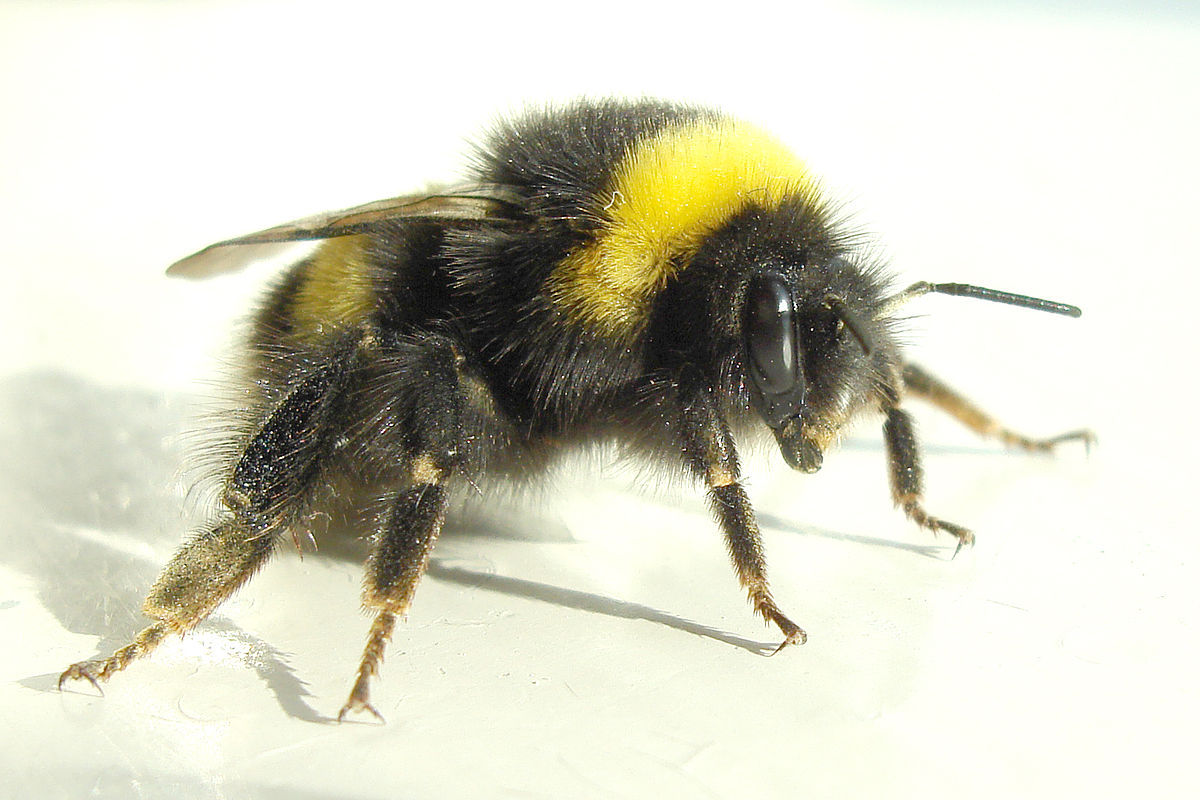
Bumblebees do not cluster in hives and are larger than honey bees.

“These include the charismatic great yellow bumblebee now confined to the northwest and the shrill carder bee, with its distinctive buzz, now only found in isolated populations in the west of Ireland,” he said.


Monday, April 23, 2018

Young Hive Bees Poisoned By Insecticides Gathered By Addled Forager Bees

Young Hive Bees Poisoned By Insecticides Gathered By Addled Forager BeesBrandon Turbeville
Natural Blaze
April 16, 2018

New research in both Europe and the United States has demonstrated yet another disturbing link between insecticides known as neonicotinoids and their adverse effects on honey bees. Prior to the research, which was conducted at the University of Buenos Aires by Carolina Gonalons and Walter M. Farina, it was already widely known that chemicals like Glyphosate, a ubiquitous herbicide, is at least partly responsible for the decline in the bee population.

The new research decided to examine the effects of “field-realistic concentrations” of common farm chemicals on young worker bees.

As Sustainable Pulse writes,

The role of worker bees is related to age. Young worker bees perform vital tasks such nest maintenance and care of the eggs and pupae. Later in life they become field or forager bees, and gather nectar and pollen for the colony. These skills involve behavioural plasticity, memory and discernment, so the GoƱalons and Farina believe the young bees serve as important bioindicators to study the effects of these chemicals on colony health.

The researchers measured the effect of glyphosate and neonicotinoids on bees by exposing them to a variety of concentrations of the chemicals.

Since the concentration of the chemicals were too low to kill the bees immediately, the testing method was to train the bees to carry out a variety of tasks, administer the chemical, and test the bees’ performance after various levels of the chemicals had been administered. The responses were assessed at 5,9, and 14 days old.

The bees were given outfitted with “tiny bee-sized harnesses” and trained to respond to various levels of smells and sucrose solution. These responses were measured by a number of different methods, but most antennae movement and extension of mouth parts.

Both of the chemicals had a negative effect on the bees’ olfactory learning and reduced sense of taste.

Ultimately, the paper demonstrated that the neonicotinoids and glyphosate negatively affect memory, smell, and taste in young bees. This is concerning due to the fact that the bees require these senses and skills for foraging. Thus, when young bees become brain damaged, the damage to the colony as a whole does not stop there but extends to the period of time when they are expected to take over the reigns of foraging. Clearly, this double tap poisoning of bees in mass agriculture could be contributing to colony collapse.

Indeed, the authors of the study are also concerned that the damages sustained to the ability to forage could threaten the survival of the bee colony as a whole, particularly at the end of summer.

Please note: This author does not condone animal testing.

Please help us out by sharing!



This article (Young Hive Bees Poisoned By Insecticides Gathered By Addled Forager Bees) was created by and appeared first at Natural Blaze. It can be reshared with attribution but MUST include link to homepage, bio, intact links and this message. Image: Pixabay

Get a nifty FREE eBook – Like at Facebook, Twitter and Instagram. Can republish but MUST include author name + link back at the TOP, links and bio intact. Must include this message!


Brandon Turbeville – article archive here – is an author out of Florence, South Carolina. He is the author of six books, Codex Alimentarius — The End of Health Freedom, 7 Real Conspiracies,Five Sense Solutions and Dispatches From a Dissident, volume 1 and volume 2, The Road to Damascus: The Anglo-American Assault on Syria,and The Difference it Makes: 36 Reasons Why Hillary Clinton Should Never Be President. Turbeville has published over 1,000 articles dealing on a wide variety of subjects including health, economics, government corruption, and civil liberties. Brandon Turbeville’s podcast Truth on The Tracks can be found every Monday night 9 pm EST at UCYTV. He is available for radio and TV interviews. Please contact activistpost (at) gmail.com.
Friday, February 9, 2018

Local Australian Government Murders 50,000 Bees Over One Complaint

Brandon Turbeville
February 9, 2018

Has there ever been a situation in which calling government authorities has worked out well for innocent people or animals?

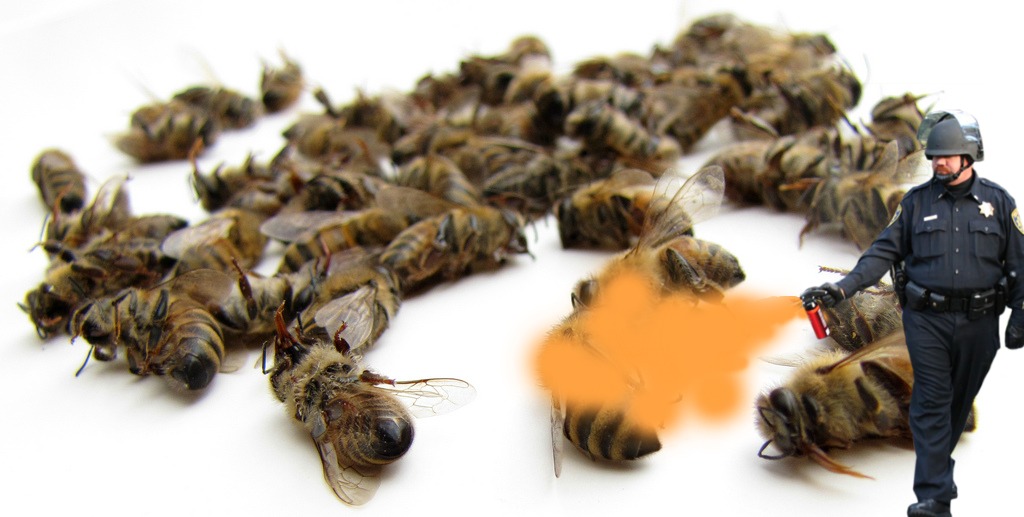
Paddington residents may be asking themselves that question today after officials from the Sydney suburb murdered 50,000 European honey bees because a resident complained.

Locals who had become accustomed to seeing the massive bee hive were horrified to find thousands of dead bees beneath the hive and across the road. Residents say that the hive was no threat to anyone and that most residents enjoyed its presence and liked to watch the hive grown. Residents say that there was no need to kill the bees when they could have been relocated which is common practice in Australia.

A spokesperson for the Woollahara Municipal Council stated that the Council had attempted to call a beekeeper and did not immediately hear back. Thus, apparently deeming a hive that had grown from nothing to 50,000 bees with no complaints from residents, a dire emergency, the council called Pest Control. All this on the alleged complaint of one alleged resident.

While it may be true enough that a resident complained about the hive (there’s always one in every group), it is interesting that every time an “officer” or “official” wants to harass, search or kill something they do so on the basis on resident responses that are always anonymous and often come from communities in which residents don’t seem to have complaints.

Thursday, March 9, 2017

Iowa City Carves 1000 Acres To Seed Habitat Rescue For Bees And Butterflies

acres beesBrandon Turbeville
March 7, 2017

As the bee population continues to decline, many people are becoming increasingly concerned. Some in Cedar Rapids, Iowa, however, are now taking action to do what they can to prevent bees from disappearing completely.

The plan coming out of Cedar Rapids seeks to seed 188 acres with wild flowers and native prairie grasses. Eventually the city wants to seed 1,000 acres of bee habitats.

The 1,000 Acre Pollinator Initiative is a result of a partnership between the Monarch Research Project and Cedar Rapids.

While MRP’s goal is to restore the Monarch butterfly population, bees and butterflies are both experiencing a crisis due to the same causes and solutions to save both are very similar as well.

The project so far has secured $180,000 in funding from both the state and MRP.

Cedar Rapids Parks Superintendent, Daniel Gibbins writes,

You don’t need to have a thousand spare acres to help bees and butterflies. Even devoting a few square feet of your garden – or even a few small planters – to wild flowers native to your area could make a difference.

Stephen Buchmann, a Pollination Ecologist at the University of Arizona and author of The Reason for Flowers said,

Thursday, February 23, 2017

As Bee Population Continues Decline Scientists Introduce Robobee

sticky gel robobeeBrandon Turbeville
February 20, 2016

As the bee population in the United States continues to decline, some scientists are working on a backup option which many people are calling the Robobee.

A recent announcement coming out of the journal Chem, in an article by Eijiro Miyako, a chemist that the National Institute of Advanced Industrial Science and Technology in Japan, involves the combination of a drone and a gel to create a robot version of the endangered pollinators.

Miyako and his team used a four-propeller drone to which they attached horse hairs in order to mimic the fuzzy body of a bee. They coated the horse hairs with the gel so that pollen would stick to the horse hairs which would then be carried from one plant to another.

Miyako said he doesn’t believe that the drones would replace bees but that it could help bees with their pollinating duties. He said that the drones will need to become smarter, more energy efficient and have better maneuverability as well as better GPS and artificial intelligence before they can be realistically used.

While working on a project designed to pick up the slack of a declining bee population is obviously not a bad thing, it would be much more prudent for the U.S. Government to immediately investigate and act on what exactly is causing the population to decline to begin with.


Wednesday, September 14, 2016

Truth on the Tracks with Brandon Turbeville - September 12, 2016

Brandon Turbeville
BrandonTurbeville.com
UCY.TV
September 12, 2016

Truth on the Tracks with Brandon Turbeville - September 12, 2016

Brandon discusses the Kratom ban, action plan, marching orders, strategy, also Monsanto's battle in India, SC's war on bees, psilocybin, the Syrian ceasefire, and 9/11.

ACCESS THE PROGRAM HERE

ACCESS THE TRUTH ON THE TRACKS ARCHIVES HERE


Thursday, September 8, 2016

South Carolina Prepares For Round 2 Of Bee-Killing Zika Spraying

aerial zika sprayingBrandon Turbeville
Natural Blaze
September 7, 2016

Apparently in South Carolina, a million dead bees are not enough. Fresh on the heels of the annihilation of millions of bees in Dorchester County, as a result of the Zika hysteria, Charleston County Mosquito Control is planning to conduct aerial spraying from Sept 7 – Sept 12 “on standing water.”

According to the county’s Facebook page, the spraying will take place from 6 a.m. to 9 p.m. Posting a notice of their intentions to spray, county officials point out that they have been aerially spraying for years and that they will be notifying the public via email 24 hours in advance. The county also states that it will work with local beekeepers to notify them of any spraying coming up.

Mosquito Control representatives have stated that they are working on public education and have given presentations to beekeeper groups in the area and have stressed the importance of the beekeepers providing their information so it can be added to records. Interestingly enough, Mosquito Control uses Trumpet for most of its aerial “adulticiding.” Trumpet contains the active ingredient of Naled but is considered different because the product is water-based and not an oil.

As Wendell Forester noted about Naled (emphasis added):

And the description of NALED provided by the Pesticide Management Education Programme out of Cornell University has this to say about NALED: 
Naled is moderately to highly toxic by ingestion, inhalation and dermal adsorption. Vapors or fumes of naled are corrosive to the mucous membranes lining the mouth, throat and lungs, and inhalation may cause severe irritation. A sensation of tightness in the chest and coughing are commonly experienced after inhalation. As with all organophosphates, naled is readily absorbed through the skin. Skin which has come in contact with this material should be washed immediately with soap and water and all contaminated clothing should be removed. Persons with respiratory ailments, recent exposure to cholinesterase inhibitors, impaired cholinesterase production, or with liver malfunction may be at increased risk from exposure to naled. High environmental temperatures or exposure of naled to visible or UV light may enhance its toxicity.


Thursday, July 31, 2014

Truth on the Tracks with Brandon Turbeville - July 28, 2014 - Video


Truth on the Tracks with Brandon Turbeville - July 28, 2014

Brandon discusses the Israeli-Palestine crisis, the Malaysian Flight Over Ukraine, a Murrell's Inlet, SC man whose bees were killed, Homeowner's Associations, and Dan Buhrdorf's open letter.

UCY.TV is an investigative media platform, designed to give YOU a voice on the platform of your choice: Video, live radio, podcasts, written articles and more. UCY.TV's website offers visitors top-notch ORIGINAL alternative news from reputable journalists, investigative field reporters, insightful radio broadcasts, LIVE video streams, exclusive interviews, archives and an intelligent forum. To learn more about how to become a part of UCY and lend your voice to the growing alternative media movement, email: contact.ucytv@gmail.com. Real news, for the people, by the people.

Tuesday, July 29, 2014

Truth on the Tracks with Brandon Turbeville - July 28, 2014

Truth on the Tracks with Brandon Turbeville - July 28, 2014

Brandon discusses the Israeli-Palestine crisis, the Malaysian Flight Over Ukraine, a Murrell's Inlet, SC man whose bees were killed, Homeowner's Associations, and Dan Buhrdorf's open letter.


ACCESS THE PROGRAM HERE

ACCESS THE TRUTH ON THE TRACKS ARCHIVES HERE