 Brandon Turbeville
March 7, 2017
As the bee population continues to decline, many people are becoming increasingly concerned. Some in Cedar Rapids, Iowa, however, are now taking action to do what they can to prevent bees from disappearing completely.
The plan coming out of Cedar Rapids seeks to seed 188 acres with wild flowers and native prairie grasses. Eventually the city wants to seed 1,000 acres of bee habitats.
The 1,000 Acre Pollinator Initiative is a result of a partnership between the Monarch Research Project and Cedar Rapids.
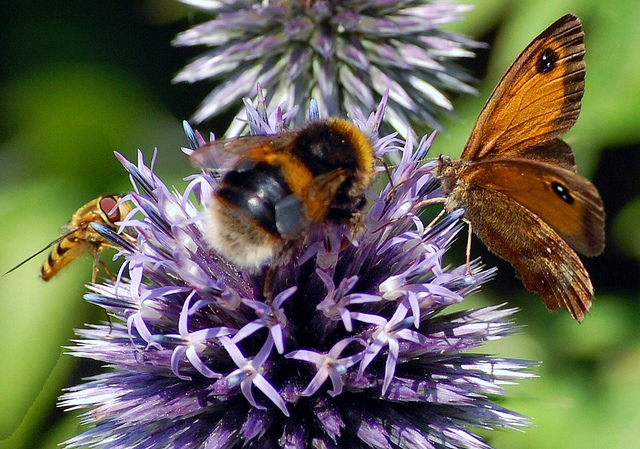
While MRP’s goal is to restore the Monarch butterfly population, bees and butterflies are both experiencing a crisis due to the same causes and solutions to save both are very similar as well.
The project so far has secured $180,000 in funding from both the state and MRP.
Cedar Rapids Parks Superintendent, Daniel Gibbins writes,
Stephen Buchmann, a Pollination Ecologist at the University of Arizona and author of The Reason for Flowers said,
As the bee population continues to decline, many people are becoming increasingly concerned. Some in Cedar Rapids, Iowa, however, are now taking action to do what they can to prevent bees from disappearing completely.
The plan coming out of Cedar Rapids seeks to seed 188 acres with wild flowers and native prairie grasses. Eventually the city wants to seed 1,000 acres of bee habitats.
The 1,000 Acre Pollinator Initiative is a result of a partnership between the Monarch Research Project and Cedar Rapids.
While MRP’s goal is to restore the Monarch butterfly population, bees and butterflies are both experiencing a crisis due to the same causes and solutions to save both are very similar as well.
The project so far has secured $180,000 in funding from both the state and MRP.
Cedar Rapids Parks Superintendent, Daniel Gibbins writes,
You don’t need to have a thousand spare acres to help bees and butterflies. Even devoting a few square feet of your garden – or even a few small planters – to wild flowers native to your area could make a difference.
Stephen Buchmann, a Pollination Ecologist at the University of Arizona and author of The Reason for Flowers said,

