Showing posts with label Kurdistan. Show all posts

Tuesday, May 22, 2018

US, French, UK, Establish More Bases In Syria To Push Breakup Of Country

Brandon Turbeville
Activist Post
May 21, 2018

As virtually all pretense of leaving Syria has vanished from the rhetoric of the White House, American and French soldiers have now moved into Kurdish held territory in Northern Syria near Manbij in an effort to prevent Turkish military operations aimed at clearing the Kurds from the border area as well as any Syrian attempt to liberate Northern Syria from Turkish terrorists.

The United States has established at least two new bases in the area near Manbij and French Special Forces have been deployed alongside the Americans.

If there was any belief that America was planning to leave Syria, that belief should now be dispelled. This is not an exit strategy, it is an occupation. It is also an attempt to solidify the “federalization” of Syria through foreign military forces acting as a deterrent to liberation.

Early on, it was reported by sources within the Kurdish/jihadist SDF that French forces were moving about in SDF territory. Shortly after those reports, photos were acquired by Sputnik that showed not only French but American forces working together in SDF territory. The photo showed two armored vehicles with military personnel in and next to them, one with a French flag and one with a US flag. The picture was taken in the area of the Sajur River in the Manbij area.

According to a senior member of the Military Council of Manbij cited by Sputnik, about 50 French soldiers were stationed in the area. On April 5, it was reported that French military forces were busy constructing a military base in the north of Manbij.


Tuesday, January 16, 2018

U.S. Create Kurdish/Terrorist 'Border Force' In Syria To Define Borders Of Kurdistan

Brandon Turbeville
Activist Post
January 15, 2018

For those that hoped Trump would bring a more sensible approach to the Western-induced Syrian crisis, it is almost for certain that those hopes have been officially dashed with the revelation of the Trump administration’s new policy regarding the SDF, Kurds, a new border force, and the logical partitioning plan that is obviously moving forward.

The new plans announced by the United States involve the creation of a “border force” that is expected to contain around 30,000 personnel to be deployed at the borders controlled by the SDF (Syria Democratic Forces). The force will be trained by the United States and will contain members from the SDF and YPG and will see Kurdish members patrolling “Kurdish areas” while Arab members patrol “Arab areas.”

Naturally, the move has angered Turkey since it is opposed to Kurdish nationalism out of fears that it will inspire Kurdish extremists inside Turkey itself. Russia has also condemned the move claiming that it will lead to partitioning. Syria, for its part, has labeled the Trump administration’s plan as an insult to Syria’s national integrity and appears dedicated to Assad’s promise to liberate every inch of Syrian territory.

As Business Insider reports,

The U.S.-led coalition is working with its Syrian militia allies to set up a new border force of 30,000 personnel, the coalition said on Sunday, a move that has added to Turkish anger over U.S. support for Kurdish-dominated forces in Syria.


Saturday, December 23, 2017

Major Protests Erupt In Iraqi Kurdistan Over Corruption, Salaries, Iraq Gov't Warns KRG

Brandon Turbeville
Activist Post
December 22, 2017

Only a few months after a failed “independence referendum” which saw the Iraqi government reassert its control over the Kurdish areas, the KRG is doing what surprises absolutely no one who is familiar with the situation on the ground – it is launching a massive crackdown on protests and dissent.

As al-Masdar News reports,
Heavy protests against the Kurdish Regional Government (KRG) in Iraqi Kurdistan have entered their fourth consecutive day, as hundreds of protesters have clashed with security units all over the region. 
The demonstrations, demanding the resignation of notoriously corrupt politicians in the Kurdish regional administration, have been met with fierce violence by KRG forces, resulting in several casualties on Tuesday. Extra reinforces were deployed to the city of Suleymaniyah on Wednesday to crack down on the protests. Over 20 officers of KRG political party and a town hall have been set ablaze according to reports. 
The protests broke out on Monday, out of frustration with the rapid deterioration of basic services in the region, all-pervasive corruption in the regional government and the lack of salary payment for public service workers, with some teachers and hospital workers complaining they haven’t been properly paid in years.

Friday, November 3, 2017

Kurds Should Not Have Independent State And Here's Why

Brandon Turbeville
Activist Post
October 31, 2017

As the Islamic State breathes its last breath in Syria and Iraq and the Syrian government gradually regains control over its own territory from Western-backed terrorists, the question of Kurdistan has now become a topic of intense debate both in the mainstream and alternative media. Unfortunately, however, many in the alternative media are now repeating the same propaganda as that of the mainstream media as well as promoting Zionist and Western imperialist agendas, wittingly or not, in the process.

Clearly, the MSM is not confused when it comes to the propaganda it pushes. However, confusion and the need for simplicity often tend to get the better of individuals less versed in certain topics. Unfortunately, that need for simplicity often is a perfect match for simplistic propaganda and thus that need for simplicity tends to become an echo of it.

The question of Kurdistan is just the type of issue that, at face value, seems easy enough to understand but, in reality, has many more facets than simply a group of oppressed people who desire independence. This is, after all, the siren song of the Kurdish question, i.e. the idea that the Kurds are oppressed people, a monolithic nationality, and underdogs who deserve and should receive their own state.

For two reasons, i.e. Western obsession with what they see as the underdog (which is virtually never the actual underdog) and certain branches of the alternative media’s penchant for anarchy in combination with simplistic analysis and observation may lead one to believe that the Kurds deserve an independent state. It is not the ideology of anarchy itself that is the problem here but the lack of proper insight into geopolitics that causes such an analytical handicap. Thus, we now have many alt media readers confused as to the legitimacy of a “Kurdistan” and the implications it would have for the region and the world.


Wednesday, September 20, 2017

The Kurdish Question: Why Federalization In Syria And The Creation of A Kurdistan Is A Very Bad Idea

Brandon Turbeville
Activist Post
September 18, 2017

Shortly after the Russian entrance to the Syrian theatre, American media became full of stories praising the heroism of the Kurdish fighters battling against ISIS in areas such as Ayn al-Arab (Kobane) and others. From stories promoting the fighting prowess of the Kurdish brigades to cleverly created propaganda campaigns regarding female Kurdish fighters, the Western press, including the alternative media, was full of stories telling Americans that the Kurds were the real victims and the real heroes of the crisis. This propaganda campaign came about the same time that the Syrian military began making serious gains against Western-backed terrorists with the help of Russia. Thus, as America’s terrorists began losing the war, America produced another “freedom fighter” poster child – the YPG.

This propaganda narrative has continued until today where it is now considered almost a heresy to suggest that the YPG is not a freedom fighting brigade that guarantees everyone’s rights. To suggest that there should not be a Kurdish state carved out of Syria is to subject oneself to the onslaught of accusations as being pro-Erdogan and/or racist. There is a reason behind the push to lionize the YPG, however, that the Western media is promoting and that the alternative media has become obviously blinded to.

U.S. Bases In Syria Set The Borders For A Federalized Country

Despite the spits and spurts of World War Three, it seems the United States (at least part of the establishment) and Russia are beginning to move toward a cooling of their approaches to the Syrian crisis. While we have seen this many times in the past – the apparent mutual understanding of Russia and the U.S. – we have been consistently been rattled by an abrupt push by the United States toward a greater involvement in Syria and a push that could very well be the catalyst for a third world war.


Friday, July 28, 2017

LGBT Brigades In Syria? Western Anarcho-Leftists Cutting Their Teeth With Western-Backed Kurdish YPG

Brandon Turbeville
Activist Post
July 27, 2017

The Western corporate press is now having a field day promoting the latest Western incarnation of destabilization in Syria – the new “anti-ISIS” LGBT brigades. No, this isn’t a prank. According to a number of sources, LGBT brigades of fighters in Syria are now joining forces with Western-backed Kurdish fighters in order “fight back against ISIS” for the persecution of homosexuals under jihadist rule as well as attacks on communities outside of terrorist jurisdiction.

Still, while the Western media is hyping the new brigades as an example of empowerment and anti-terrorist heroism, there is much more to the story than meets the eye. In addition, it involves a number of different factions and Western intelligence activity both at home and abroad.

Who Are The LGBT Brigades?

According to corporate outlets like the Daily Beast, the LGBT brigades are made up of “international volunteers” branding itself as the Queer Insurrection and Liberation Army (TQILA). The group appears to be an offshoot from the International People’s Guerrilla Forces (IRPGF), who announced the creation of TQILA. IRPGF itself is a member of the International Freedom Battalion, a group of foreign fighters who have traveled across the world to join Kurdish fighters, the YPG, in Syria. The goal of these groups is not so much to “defeat ISIS” but to aid in the creation of the bizarre anarcho-leftist state desired by the Kurdish fighters.

A statement posted by TQILA on the group’s Twitter page said that its members “seek to smash the gender binary and advance the women’s revolution as well as the broader gender and sexual revolution.”


Thursday, July 13, 2017

U.S. Bases Strategically Placed To Prevent Syrian Military From Advancing; Outlining Borders Of Kurdistan

Brandon Turbeville
Activist Post
July 12, 2017

Despite the spits and spurts of World War Three, it seems the United States (at least part of the establishment) and Russia are beginning to move toward a cooling of their approaches to the Syrian crisis. While we have seen this many times in the past – the apparent mutual understanding of Russia and the U.S. – we have been consistently been rattled by an abrupt push by the United States toward a greater involvement in Syria and a push that could very well be the catalyst for a third world war.

While there obviously remains the possibility that the United States will once again lash out like a dying lunatic empire, risking the lives of everyone on earth, we might also ask whether or not the U.S. has had a change in strategy or even perhaps whether or not the American “Plan B” is coming to fruition.

U.S. Bases In Syria Set The Borders For A Federalized Country

The United States is currently, by stealth, setting up a situation in which it is firmly entrenched in its illegal occupation of Syrian territory. The American bases in Syria which have now reached a count of eight, possibly even nine according to some sources, follow along a distinct line of what will be the formation of the borders of a fractured Syria and the creation of a Kurdistan. Combined with Israel’s illegal occupation of the Golan Heights, the United States has set up a number of bases that traverse Kurdish held territory both in the North near Ayn al-Arab (Kobane) and all along the Turkish border as well as throughout the southeast of the country in territory taken by the Syria Democratic Forces, a brigade of fighters made up of Kurdish extremists and Islamic terrorists.


Wednesday, May 24, 2017

America Arms The Kurds and Terrorists, Turks Bomb Kurds and Assist Terrorists: What Side Is Everyone On?

Brandon Turbeville
Activist Post
May 24, 2017

Recently, the Trump administration approved the arming of Kurdish militias in Syria with heavy weapons. Early on, Trump had allowed for the shipment of various armored vehicles and light weaponry to be shipped to Kurdish fighters but the new announcement will see restrictions removed and allow for even more plentiful and powerful weaponry being sent to Kurds in Syria who are battling terrorists, Turkey, the Syrian military, and non-Kurd militias.

Turkey is obviously outraged at the new announcement. These Kurdish fighters are bound to use those arms against Turkey at some point if for no other reason that the fact that Turkey has invaded Syrian territory and launched a war not on ISIS but the YPG. At the same time, however, the United States and Turkey are allies with Turkey doing the bidding of the U.S. for the past six years of the conflict in Syria.

With only three nations being discussed, we already reach the beginning of the tangled web of alliances, interests, and goals that become ever complicated the deeper one attempts to look to understand them. Syria, United States, Kurds, Turkey, terrorists, Russia, Iran, Hezbollah, Israel, Saudi Arabia are all players that have strategic interests related to this specific issue and whose relationship will be changed and morphed into something new as a result of the recently announced U.S. policy toward Kurdish fighters.

The Race For Raqqa

One of the reasons for the recent increase in U.S. support to Kurdish fighters is the race to Raqqa, an attempt on the part of the United States and NATO to seize Raqqa from ISIS before the Syrian military is able to do so. This is also the reason many ISIS fighters have traveled to Deir ez-Zour in order to stop the SAA advances there, i.e. because Deir ez-Zour is a prerequisite for Syrian military in their upcoming assault on Raqqa. Raqqa, of course, can afford to lose terrorists since the U.S.-backed forces are soon going to attempt to “take it” and rebrand the city and the region as under the control of “moderate” or Kurdish forces. The forces that occupy Raqqa will be no different than ISIS in anything other than their name but it will go great lengths in preventing the Syrian military from retaking the city and province due to the protection placed over Kurdish and “moderate” terrorist forces by the anti-Syria coalition.


Monday, March 27, 2017

U.S. Increasing Involvement In Syria Yet Again As Regional, World Tensions Flare - Are We Edging Toward Federalization, World War Three In Syria?

Brandon Turbeville
Activist Post
March 24, 2017

Are We Edging Toward Federalization, World War Three In Syria?

As tensions continue to rise between Syria, Israel, Iran, Hezbollah, and Russia, the United States is also upping the ante in Syria. After mobilizing troops to Manbij and engaging in a series of airstrikes including a questionable report of the U.S. bombing a Mosque in Jineh and a more substantiated report of an American bombing of a school in al-Manswra, the U.S. also announced a major intensification of direct military participation in Syria by virtue of its airlift of American service personnel, Kurdish fighters, and moderate cannibals to an area very near Raqqa, the de facto ISIS capital.

On March 22, the Pentagon announced that members of the SDF were airdropped behind enemy lines in an area close to the Tabqa dam, west of Raqqa. The dam is thought to be populated by hundreds of “foreign fighters” and reports are suggesting that a battle is currently raging near the dam.

The announcement was made as the 68-member U.S.-led coalition met in Washington. U.S. Secretary of State, Rex Tillerson stated that it is only a matter of time before ISIS leader Abu Bakr al-Baghdadi is killed. As BBC reported,
The Pentagon declined to say how many US aircraft had been used to airlift Arab members of the Kurdish-led SDF close to the Tabqa dam, on the River Euphrates some 45km (28 miles) west of Raqqa, a key stronghold of IS. 

Wednesday, March 15, 2017

U.S. Mobilizes Troops To Block Syria Military’s Progress, Halt Conflict Between Turks And Kurds

Brandon Turbeville
Activist Post
March 15, 2017

On March 2, U.S. troops were spotted moving in a convoy toward the Syrian city of Manbij in Northern Syria.

This new mobilization caught many Syrian researchers by surprise and has caused utter befuddlement on the part of the hapless mainstream average viewer. Why would the U.S., who has already invaded Syria, make another push inside Syria in such a limited way? And why Manbij? This is, of course, the confused response of the minority who actually know that there is even a conflict in Syria.

The mobilization and deployment comes as Turk Euphrates Shield troops exchanged fire with Kurdish forces (Manbij Military Council) in areas West of Manbij.

Spokesman for the Combined Joint Task Force for Operation Inherent Resolve, Col. John Dorrian, said that the deployment was a “deliberate action” taken in order to make sure that the forces of the US-led coalition were able to “deter aggression” and “keep the focus on defeating ISIS” elsewhere in Syria.

Dorrian’s statements were a response to Kurdish news agency Rudlaw’s tweet announcing the sighting of the American troops.

U.S. military officials have said that this deployment does not necessarily mean that there has been an increase in the number of American soldiers deployed to Syria as a whole, only that these specific soldiers have been mobilized. That, however, remains to be seen.


Tuesday, August 30, 2016

Turkish Invasion Of Syria Reveals Vortex Of Interests

syria safe zoneBrandon Turbeville
Activist Post 
August 30, 2016

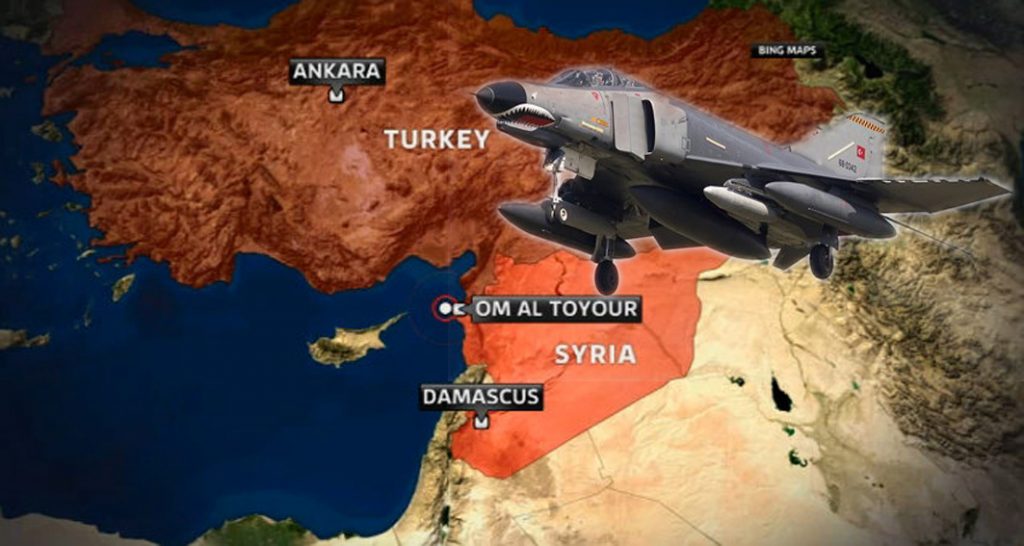
As Turkey deepens its push into Syrian territory, numerous geopolitical interests are now colliding with one another in what appears to be a war worthy of the reputation the Middle East has for political and geopolitical complexity. Having had its immediate expedition across the Turkey-Syria border condemned by the Syrian government, Turkey is now facing some public criticism from the United States in regards to its military efforts against Kurdish forces east of the Euphrates who are themselves aligned with the United States, partially against ISIS and the Syrian government as well as staunch enemies of the Turkish government.

The United States is stating publicly (although public statements do not always mirror behind the scenes agendas) that fighting between Turkey, Turk-supported “rebels” (aka ISIS, al-Qaeda, FSA), and Kurdish forces is “unacceptable” and that the clashes must stop. The U.S. envoy to the anti-ISIS coalition, Brett McGukr, stated that fighting in areas where ISIS was not present is “a source of deep concern.”

According to the BBC,

Turkish forces have attacked what they say are Kurdish "terrorists" since crossing the border last week. 
But the Kurdish YPG militia says Turkey just wants to occupy Syrian territory. 
Ankara says it aims to push both IS and Kurdish fighters away from its border. 
Turkish forces and allied factions of the rebel Free Syrian Army (FSA) forced IS out of the Syrian border city of Jarablus on Tuesday and have since pounded neighbouring villages held by Kurdish-led, US-backed Syria Democratic Forces (SDF). 

Tuesday, July 12, 2016

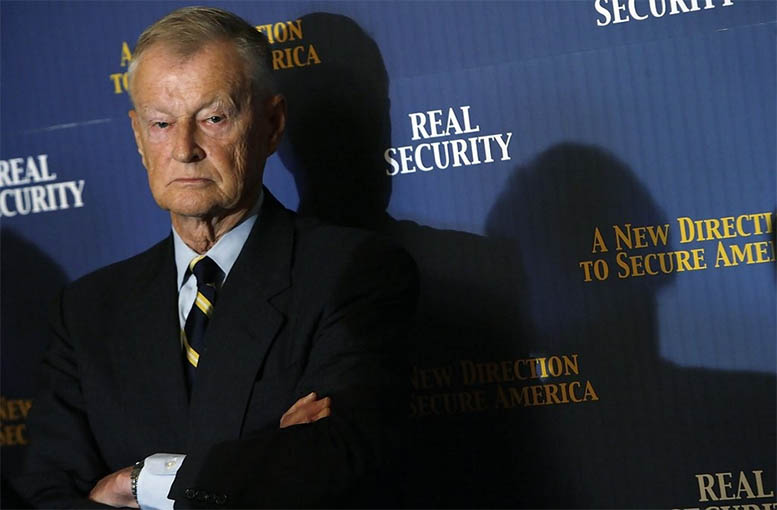
Clashes Between Syrian Army, Kurds Pushes Brzezinski Plan Forward In Syria

brzezinski_geopolitics-777Brandon Turbeville
Activist Post
July 11, 2016

It was only a matter of time before the Syrian military and Kurdish organizations butted heads in Syria over who controls specific territory in the north. Over the past few months and as both the Kurds and the SAA push forward against the ISIS and related Western-backed forces operating near the Turkish border, these confrontations have become increasingly frequent, requiring the help of outside negotiators to defuse the situation and implement a ceasefire.

For instance, as far back as April 20, a heavy firefight was ignited when Kurdish police (Asayish) would not stop at a Syrian border checkpoint in Qamlishi. The fight lasted three days, taking the lives of 10 Kurdish fighters and 22 SAA soldiers as well as 17 civilians. Many innocent lives lost and much time and equipment wasted that could have been spent on ISIS.

On April 22, the Russians were able to secure a ceasefire which was respected by both sides, despite remaining tensions. In Qamlishi, all joint Syrian-Kurdish roadblocks and checkpoints were dismantled as a result. Still, a prisoner swap was organized and taken advantage of almost immediately by both sides.

At the end of the battle, YPG forces found themselves in control of a formerly government-held prison on the outskirts of Qamlishi and the NDF took control over several locations in Qamlishi’s central districts. Government troops still maintain control over about 50 villages on the southern border of the city, despite being effectively surrounding by Kurdish fighters. It is expected that the YPG will eventually attempt to take the city since it is the “capital” of the “Rojava Government” also known as “Syrian Kurdistan.” Such an attempt would result in a fierce battle, however.

Another incident took place in Hasakah on July 3 when the city became the site of sporadic clashes between the SAA and the YPG. Like the result of the Qamlishi deal, a ceasefire was struck between the two sides and a prisoner exchange was made. The SAA will soon hand over control of the Literature College and two other sites recently seized by their forces to the YPG and Asayish.


Tuesday, April 12, 2016

Truth on the Tracks with Brandon Turbeville - April 11, 2016

Brandon Turbeville
BrandonTurbeville.com
UCY.TV
April 12, 2016

Truth on the Tracks with Brandon Turbeville - April 11, 2016

Brandon discusses the Panama Papers, Israel's connections to the "Syrian Rebels," the Syrian Crisis, and Kurdish federalization.

ACCESS THE PROGRAM HERE

ACCESS THE TRUTH ON THE TRACKS ARCHIVES HERE


Tuesday, March 22, 2016

Truth on the Tracks with Brandon Turbeville - March 21, 2016

Brandon Turbeville
BrandonTurbeville.com
UCY.TV
March 22, 2016

Truth on the Tracks with Brandon Turbeville - March 21, 2016

Brandon discusses the Syria crisis, the Russian "withdrawal," Kurdish "Federalization," the 2016 elections, and the divide and conquer strategy in the United States.

ACCESS THE PROGRAM HERE

ACCESS THE TRUTH ON THE TRACKS ARCHIVES HERE


Thursday, March 17, 2016

Kurdish "Federalization" Reminiscent Of Kerry's Plan B, Brzezinski, NATO's Plan A

1034543800Brandon Turbeville
Activist Post
March 17, 2016

Kurds in Northern Syria have declared a federal system in Syria, with the areas they have seized in the northern part of the country designated to act as an autonomous zone. The official declaration came on March 16, with reports like those coming from the BBC reaching western audiences on March 17. According to reports, the conference at which the federation of three Kurdish entities in Syria took place was located in Rmeilan.

Kurdish journalist Barzan Iso confirmed the initial rumors surrounding the Kurdish declaration to RT earlier on March 16 when he stated that “Now the conference has just started in Rmelan, about 200 representatives of Rojava have joined [the event]. They represent different ethnicities and nationalities. There are Kurds, Arabs, Assyrians, Syriacs, Turkomans, Armenians, Circassians and Chechen. Also we have representatives from the Syrian democratic forces, YPG, women defense units. This conference is supposed to announce a federation as a political project for Rojava region in northern Syria.”

The “new project” is designed to replace the currently autonomous zone of Rojava by formally creating a Federation of Northern Syria incorporating the 250 miles of Kurdish-held territory along the Syria-Turkey border with the section of the northwestern border near the Afrin area. At least, this is the plan as relayed by Idris Nassan, an official working in the Foreign Affairs Directorate of Kobane (Ayn al-Arab). The new system entails “widening the framework of self-administration which the Kurds and others have formed,” he said.

Rojova only received a degree of autonomy in 2013, when Syrian forces were overwhelmed by Western-backed terrorists and were forced to abandon much of the territory now occupied by Kurdish militias such as the YPG and others. In place of the SAA, the NDF and other Syrian patriot militias, as well as Kurdish forces, remained and fought terrorists gallantly to the point of securing large swaths of border territory.


Wednesday, March 16, 2016

Kurds Declare Autonomous 'Federal' System In Syria

kurds_syriaBrandon Turbeville
Activist Post
March 16, 2016

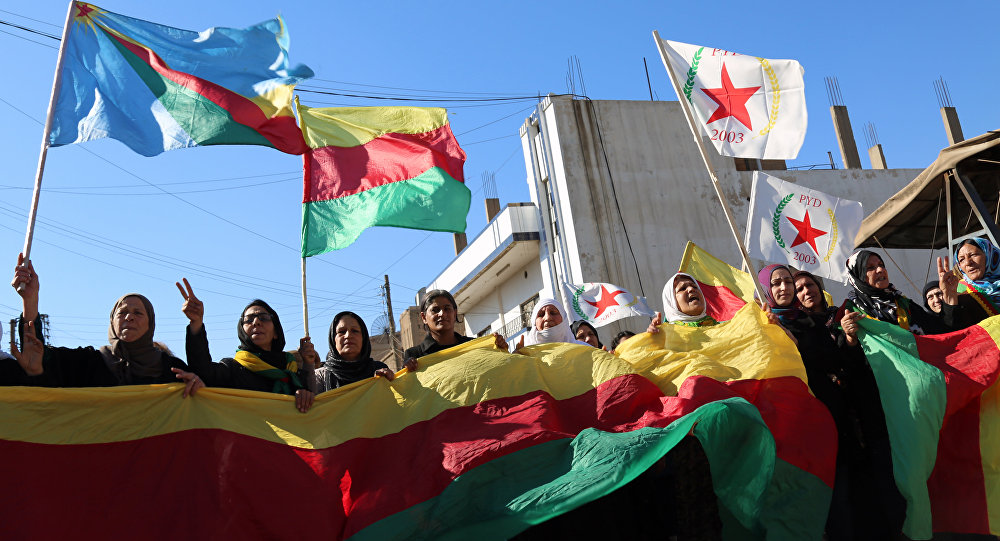
Kurds in Northern Syria are expected to declare a federal system in Syria, with the areas they have seized in the northern part of the country acting as an autonomous zone. The announcement is expected to come in a matter of hours according to media sources on the ground in the Kurdish-controlled areas. According to these reports, a conference to declare the federation of three Kurdish entities in Syria will take place in Rmelan.

Kurdish journalist Barzan Iso confirmed the rumors to RT when he reported that “Now the conference has just started in Rmelan, about 200 representatives of Rojava have joined [the event]. They represent different ethnicities and nationalities. There are Kurds, Arabs, Assyrians, Syriacs, Turkomans, Armenians, Circassians and Chechen. Also we have representatives from the Syrian democratic forces, YPG, women defense units. This conference is supposed to announce a federation as a political project for Rojava region in northern Syria.”

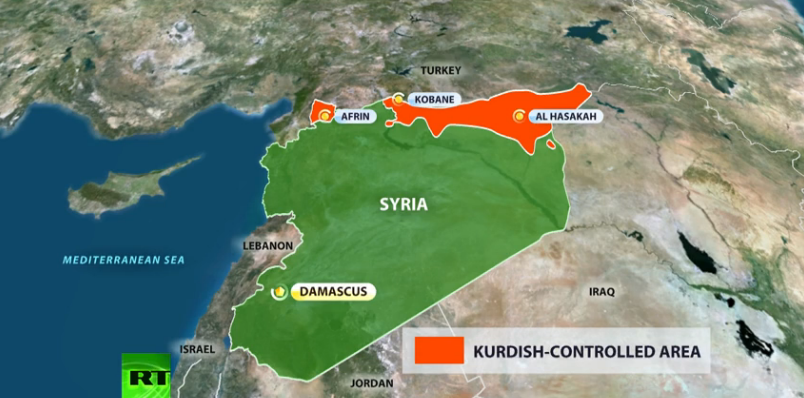
The “new project” would replace the currently autonomous zone of Rojava by formally creating a Federation of Northern Syria incorporating the 250 miles of Kurdish-held territory along the Syria-Turkey border with the section of the northwestern border near the Afrin area. At least, this is the plan as relayed by Idris Nassan, an official working in the Foreign Affairs Directorate of Kobane (Ayn al-Arab). The new system would entail “widening the framework of self-administration which the Kurds and others have formed,” he said.

Rojova only received a degree of autonomy in 2013, when Syrian forces were overwhelmed by Western-backed terrorists and were forced to abandon much of the territory now occupied by Kurdish militias such as the YPG and others. In place of the SAA, the NDF and other Syrian patriot militias, as well as Kurdish forces, remained and fought terrorists gallantly to the point of securing large swaths of border territory.


Thursday, January 21, 2016

U.S. Throws Kurds To The Wolves, Launches Program To Roll Back Kurdish, Not ISIS, Advances In Syria

us isisBrandon Turbeville
Activist Post
January 20, 2016

'L'Angleterre, ah, la perfide Angleterre,
que le rempart de ses mers rendoit inaccessible    aux Romains,
la foi du Sauveur y est abordée.  ----Jacques-Benigne Bossuet

It has been said by RPI advisor John Laughland that “it is better to be an enemy of the Americans than their friend. If you are their enemy, they might try to buy you; but if you are their friend, they will definitely sell you.”

Regardless of whether or not one can apply such logic to every interaction with the United States, it is a lesson that the YPG Kurds are learning in Syria.

The YPG have long been considered as one of the warmer forces in terms of its relation to the United States. While certainly not the equivalent of the Iraqi “Barzani” Kurds who are closely connected to the NATO intelligence apparatus, the YPG has been willing to accept help from any who are interested in defeating ISIS, be that the Syrian government or the United States.

Whether the YPG was unable to see that U.S. assistance in the “fight against ISIS” was nothing more than a smokescreen for American support of the organization or whether the YPG was willing to work with the United States because it believed by doing so it would eventually seize a Kurdistan in Northern Syria is not fully known at this time. Regardless, the YPG seems to have outlived its usefulness to the United States.

The YPG has already seized much of the border with Turkey and effectively cutting off ISIS supply lines coming from Turkish territory except for a small corridor now known as the Jarablus corridor one of the only areas ISIS supplies and terrorists can funnel their way into to Syria. Yet, even after having made a number of attempts to forcibly keep ISIS supply lines open – the implementation of a No-Fly Zone, the insertion of American soldiers into the Jarablus “safe zone,” and a Turkish air war on the Syrian Kurds , the United States seems to be out of covert ideas and is now moving to an overt operation against fighting forces who are not only fighting ISIS but are having significant victories against them and who, only weeks ago, were considered allies, even if they were held at arm’s length.


Saturday, July 4, 2015

Carving Out Kurdistan - The US/NATO Plan To Break Up Syria and Iraq

Brandon Turbeville
Activist Post
July 3, 2015

Over the last few months, Americans who pay attention to current events have been treated to a surprising barrage of praise coming from the mainstream media regarding the Kurdish fighters in Syria. The Kurds have been presented as true freedom fighters and an opposition that the US can justify supporting, at least at some level, against ISIS.

Much of this praise is well-deserved. Kurdish fighters have indeed fought bravely against ISIS, dealing blow after blow to the Western-backed terrorist group on a number of occasions. Indeed, the Kurds have fought so skillfully that the US was quick to steal credit for a high-profile operation that was actually conducted by Syrian and Iraqi Kurds – the rescue of trapped Yazidis on the top of Mt. Sinjar.

The resolve that Kurdish fighters showed in their fight against ISIS at Ayn al-Arab (aka Kobane) was extraordinary as was their understanding of the necessity for coordination and cooperation with the Syrian government with regards to issues containing mutual strategic self-interest for both parties.

The West, however, particularly NATO spear-headed by the United States has long had much a much different interest in the Kurdish fighters and their relationship to the region and the conflict currently raging there. Indeed, the Kurds have long acted as a force which the US has been able to harness to stir up destabilization in the Iraqi, Syrian, Turkish, and Iranian sphere. Such is the case now, as the US and NATO powers seek to use the Kurdish desire for an independent country – Kurdistan – as a destabilizing force against Syria, Iraq, and Iran and a galvanizing force for the Turks. Whether or not the Kurds will ever obtain such an independent state, however, remains to be seen.